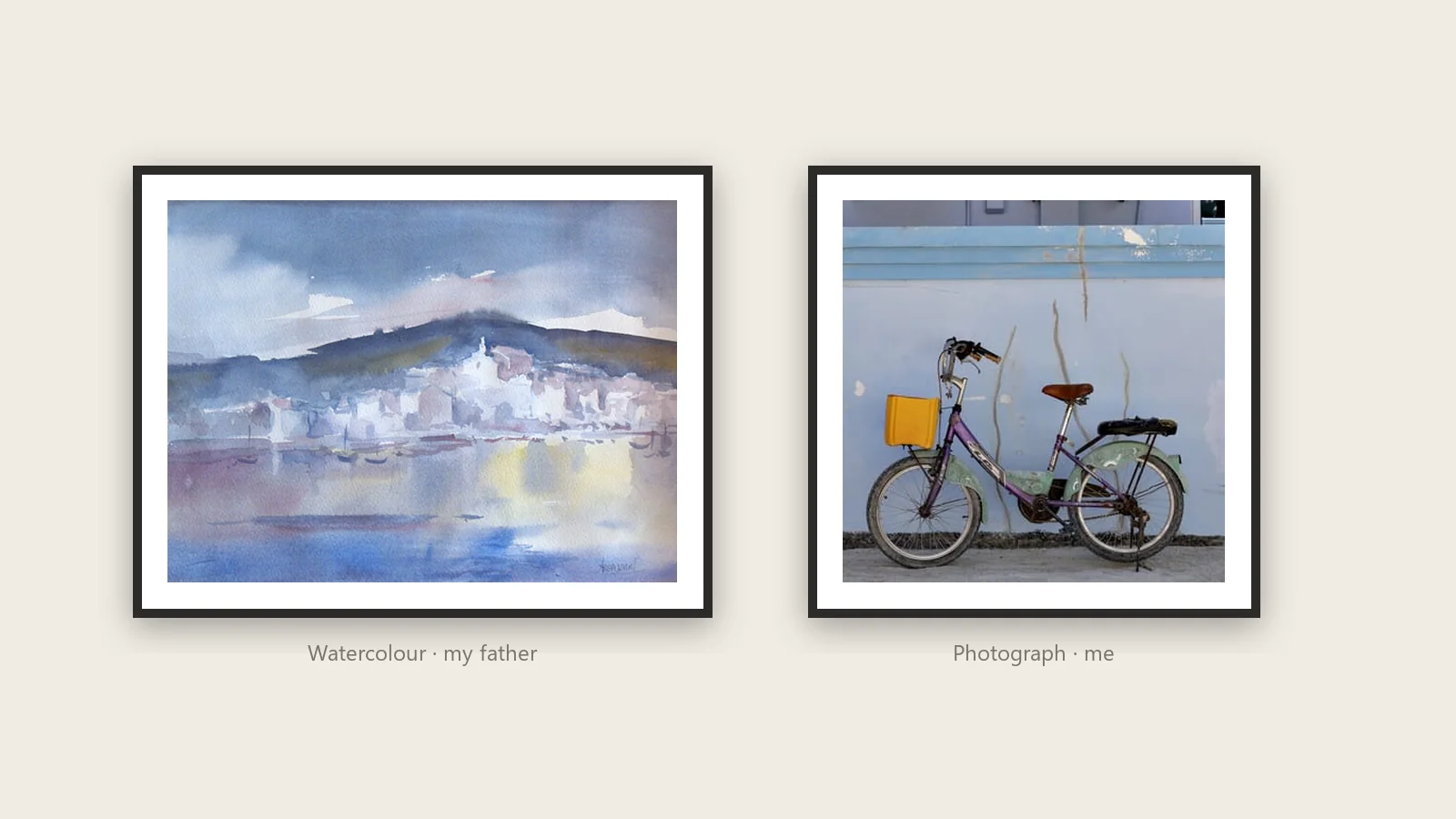
Let me start with a confession: I am a complete outsider to the traditional art circuit. I did not go through a formal art education, and I did not slowly build a network of contacts to grow an artistic career.
In a way, I had already seen how that works through my father. He was an anonymous artist to the world until he joined AEDA, the Agrupación Española de Acuarelistas (the Spanish Watercolour Society). You can still see his work in the AEDA gallery. That led to some group exhibitions and, eventually, to contests and solo exhibitions. Unfortunately for him, this was before the internet took off, and he missed the chance to be recognised more broadly.
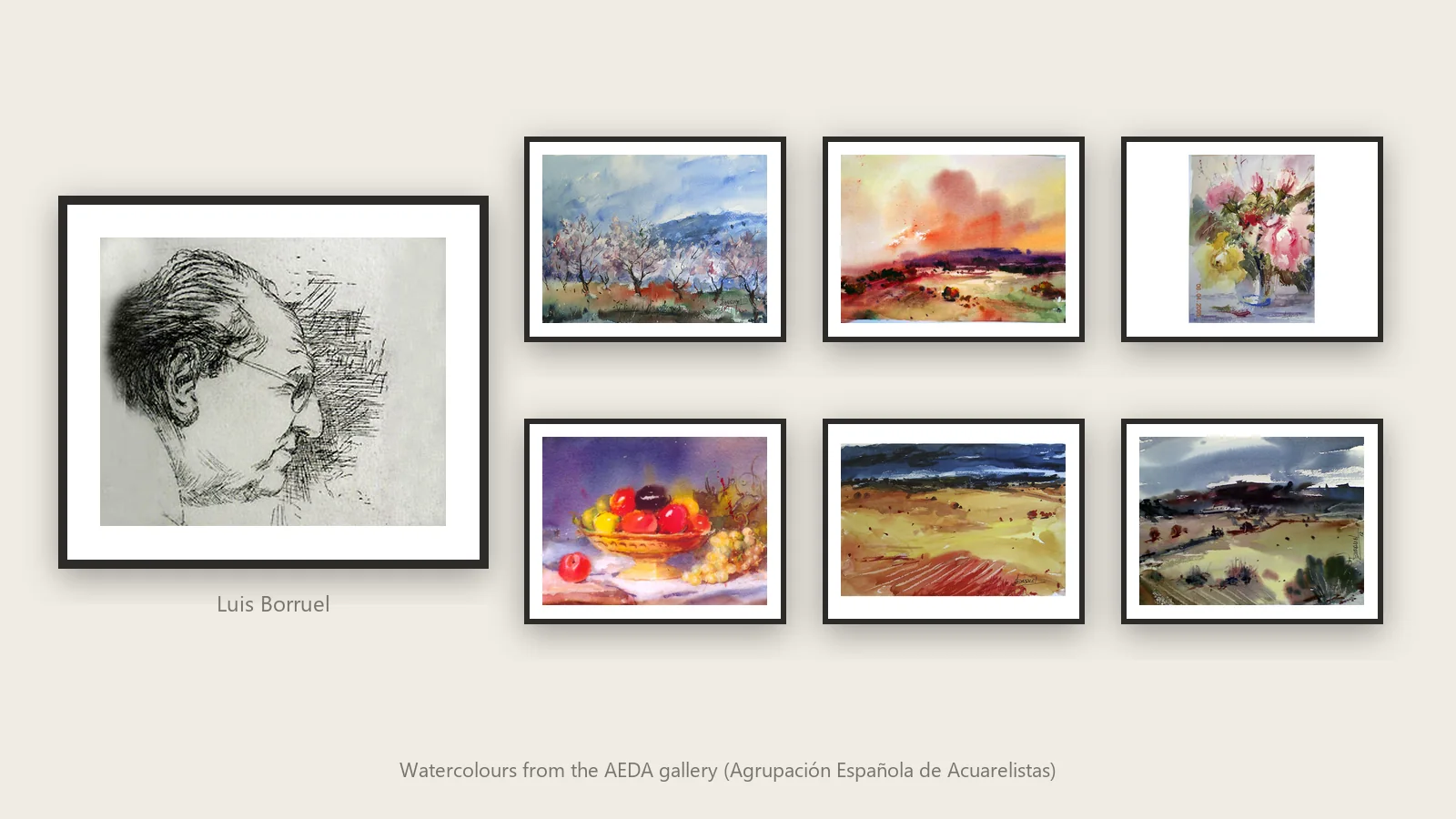
This is also my own story, and I am sure it resonates with millions of hidden artists worldwide. Coming from a scientific and tech background, it was inevitable that I would merge the two disciplines. Early on I built my own site, and eventually I developed OpenVGal. Even if that part has been very fruitful, I wanted to cross over into the world of traditional art. Why not?
The art world consists of two big groups: creators and collectors. Most collectors live connected to traditional art channels. So the question is:
What options are available today, in the open world of the internet, to show your art online and reach those channels?
I tried, or at least looked closely at, eight of them. They fall into two roads: knock on the door of a gatekeeper, or build your own door.
| # | Option | Who decides if you’re shown? | What it costs you | Control over how your work looks |
|---|---|---|---|---|
| 1 | Online art residencies | Selection committee | Application fee + time | Low |
| 2 | Art and photography contests | Jury | ~$20–30 per entry | None |
| 3 | Commercial galleries | Curators | Commission on sales | Low |
| 4 | Open calls (vanity galleries) | Nominally a jury | Participation fee if “accepted” | Low |
| 5 | NFTs | You (and the platform) | Minting and platform fees | Medium |
| 6 | Website builders and portfolio platforms | You (and the algorithm) | Monthly subscription | Medium |
| 7 | Your own artist website | You | Hosting + a lot of time | High |
| 8 | Social media | The algorithm | Free, but costs hours every day | Low |
Road A: ask a gatekeeper (residencies, contests, galleries)
1) Online art residencies
You can apply to online residency programs and try to start from the beginning of the art circuit. I made a few attempts, but for someone self-taught it is difficult to be a good fit for those programs, and they politely refused my applications. I must say I did not try extremely hard.
Cost: time, and usually an application fee. What you get if accepted: a credential, a community, and a line on your CV that the next gatekeeper will read.
2) Art and photography contests
Photography contests must be a great business. It is like buying a lottery ticket: affordable, and someone wins, right?
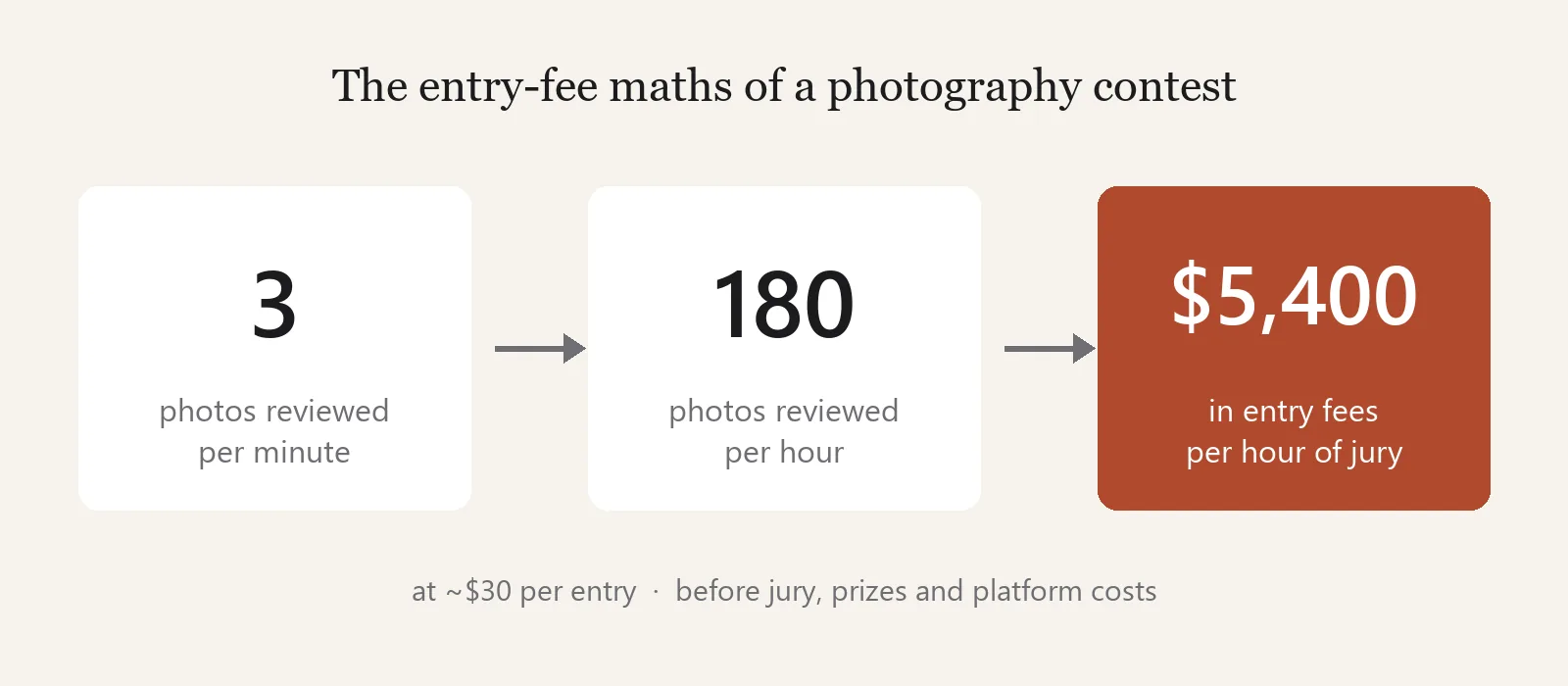
The game works like this. In most cases you pay an entry fee, around $20–30 per photograph. Affordable in many countries, but still enough to stop you from entering a contest every day. Your photos are reviewed by a jury or curation committee. There is usually little transparency on how your work will be judged, or even how many people entered. You can raise the stakes and pay an extra fee for a written review of your entries.
Now do the maths. If a juror reviews 3 photos per minute (not very demanding), that is 180 photos in one hour, or 180 × $30 = $5,400 per hour of entry fees. I know what you are thinking: you need to pay the jury, the prizes and the platform. Still, it looks like a very nice business, and in the times of AI it scales even better.
To be fair, some contests are run seriously, publish their jury and their number of entries, and give winners real exposure. My advice: before paying, look for those three things. If you cannot find them, you are buying a lottery ticket.
3) Commercial art galleries
You can aim for a physical exhibition in a commercial gallery. For many artists this is the greatest goal: having your work in a place where people can see it in person, and even selling it.
But here is the problem: the ladder is very high. There are hundreds of galleries with websites, and the vast majority discourage anyone from contacting them to assess their work. The curation teams decide not only who gets to exhibit, but even who gets in the queue.
I understand that spam is an issue (and with AI it is even worse). Curators are flooded, and saying no is part of their job. Still, it puzzles me that almost nobody has an open door: “Hey, come to my site and send me your ideas. No promise to answer soon, or to accept, but I am always glad to see what you want to show.” The few galleries that do this deserve more credit than they get.
4) Open call exhibitions (and how to spot a vanity gallery)
Then you have open calls. Yes!!! This is what I always dreamt of. A clean open call where I can send my best pieces, for free, to be considered for a group exhibition, anywhere in the world.
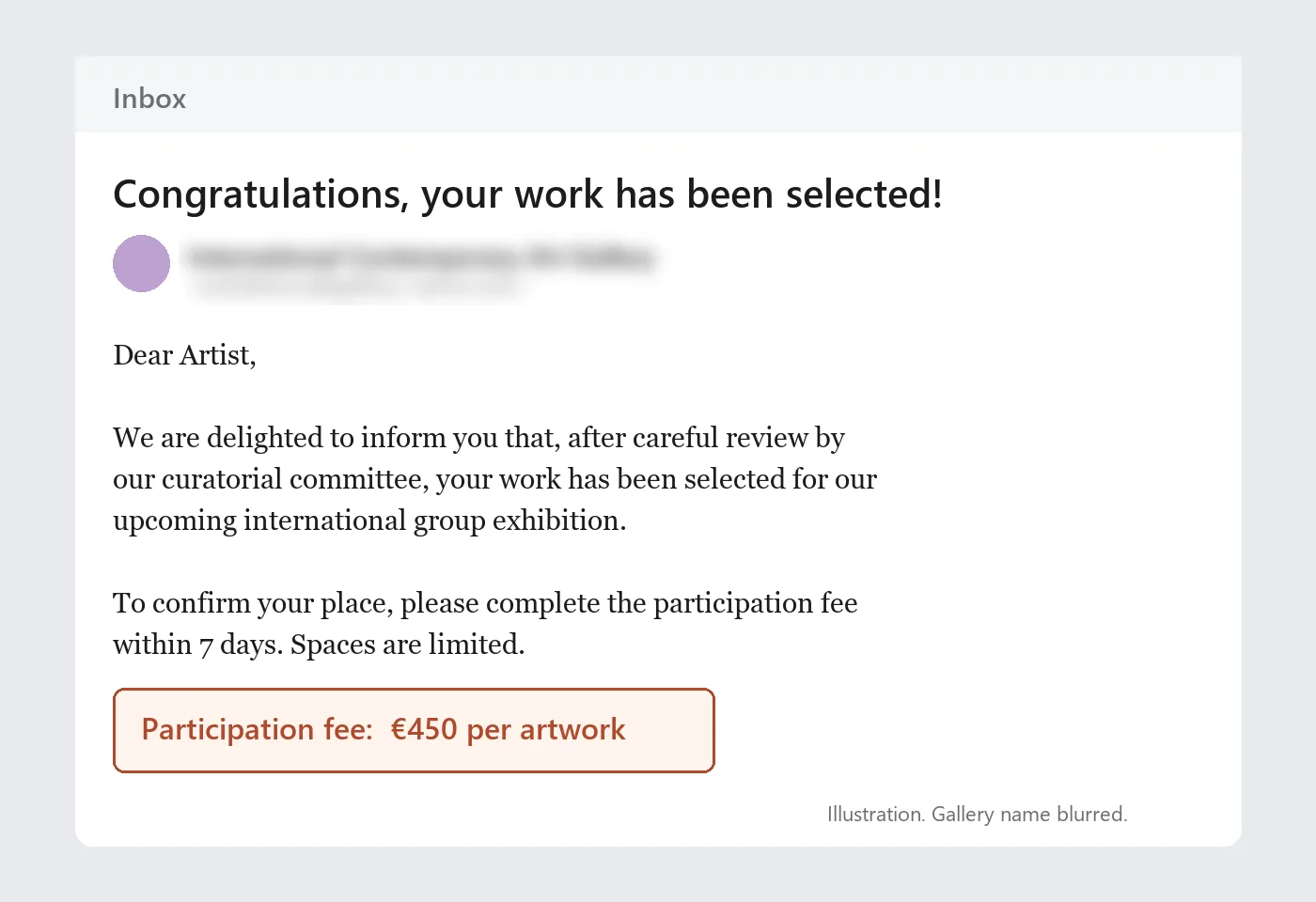
The scheme goes like this: no upfront fee and no theme. That is great, I always fit! They carefully select the best works, and only if you are accepted do you need to pay a participation fee. OMG, I need to try this.
…Of course, if everybody fits and everybody who is accepted pays, the selection is not really the business. The fee is. These are the so-called vanity galleries, and they deserve a separate article. Quick test: if the gallery earns its money from artists rather than from collectors, you are the customer, not the artist.
Road B: build your own door (show your art online yourself)
In all of the above you need a third party to say yes. But you may want to be independent.
5) NFTs
You can mint NFTs. I know this sounds awful at the end of 2026. It was such a promising idea in 2021, and now the NFT space looks like a post-nuclear world. I honestly still believe in the format, and I think it can be a great way to sell in the future, when our lives are more immersed in virtual worlds.
The step that is needed, I think, is to really decentralise it. Almost every artist I know minted through essential third-party services: OpenSea and others. Many artists were very sad when Foundation wound down, but that can happen to any platform at any time. Manifold improved things a bit by letting artists deploy their own contracts, but the sovereign landscape is still far from a fully decentralised option.
6) Website builders and portfolio platforms
You can use a hosted service: Wix, Squarespace, or portfolio communities like Behance and ArtStation. You pick a template, upload your work, and you are online in an afternoon, with no technical knowledge.
The trade-off: you rent the space. You pay a monthly fee, your work looks like every other site using the same template, and on the community platforms the algorithm (again) decides who sees you. It is a big step up from nothing, but you are still living in someone else’s house.
7) Your own artist website
You can set up your own website with a hosting service. This is a major leap in independence: you have total freedom over the content and how it is shown. I have always been interested in the design side of the web: how people interact with content, and how easy it is to use.
I hosted a WordPress site for six years (WordPress is an open-source publishing platform), but in a way it was like a house without furniture. You needed many plugins and extra tools, some free and some not, to turn a simple blog page into a beautiful photo gallery. With LLMs, the technical barrier has dropped dramatically, and most of that work is now superseded.
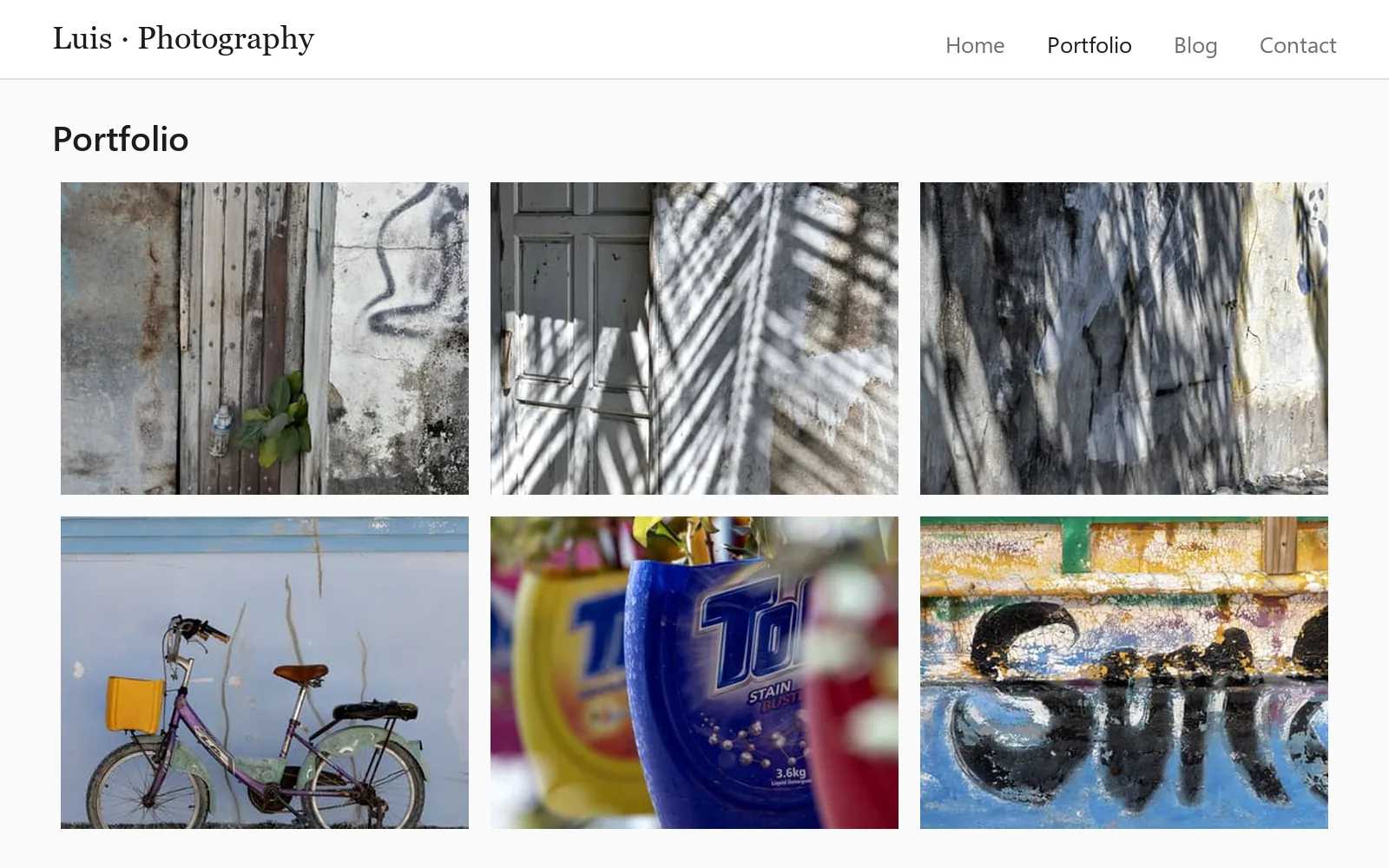
But here is what struck me. What a nice self-hosted site offers, at the end of the day, is an improved version of option 6. Your photos are shown in a mosaic or a carousel, with the option to zoom in and see each one individually. It is a better catalogue, but it is still a catalogue. Nobody walks into a catalogue.
8) Social media for artists
You can post on social media. There are indeed very well-known artists on social media. It feeds the ego, but for most of us mortals it requires a level of dedication, and a price, that many are not ready to pay. Producing art is no longer the priority; producing posts is. You have to produce, engage, cross your fingers, and study the algorithm.
So, which road? The case for a virtual art gallery
Neither road is easy. On the gatekeeper road, you need to become part of the club and still stay true to your principles. On the independent road, you can be fully your own person, but you have to find your audience, and the tools mostly show your work as a grid of thumbnails.
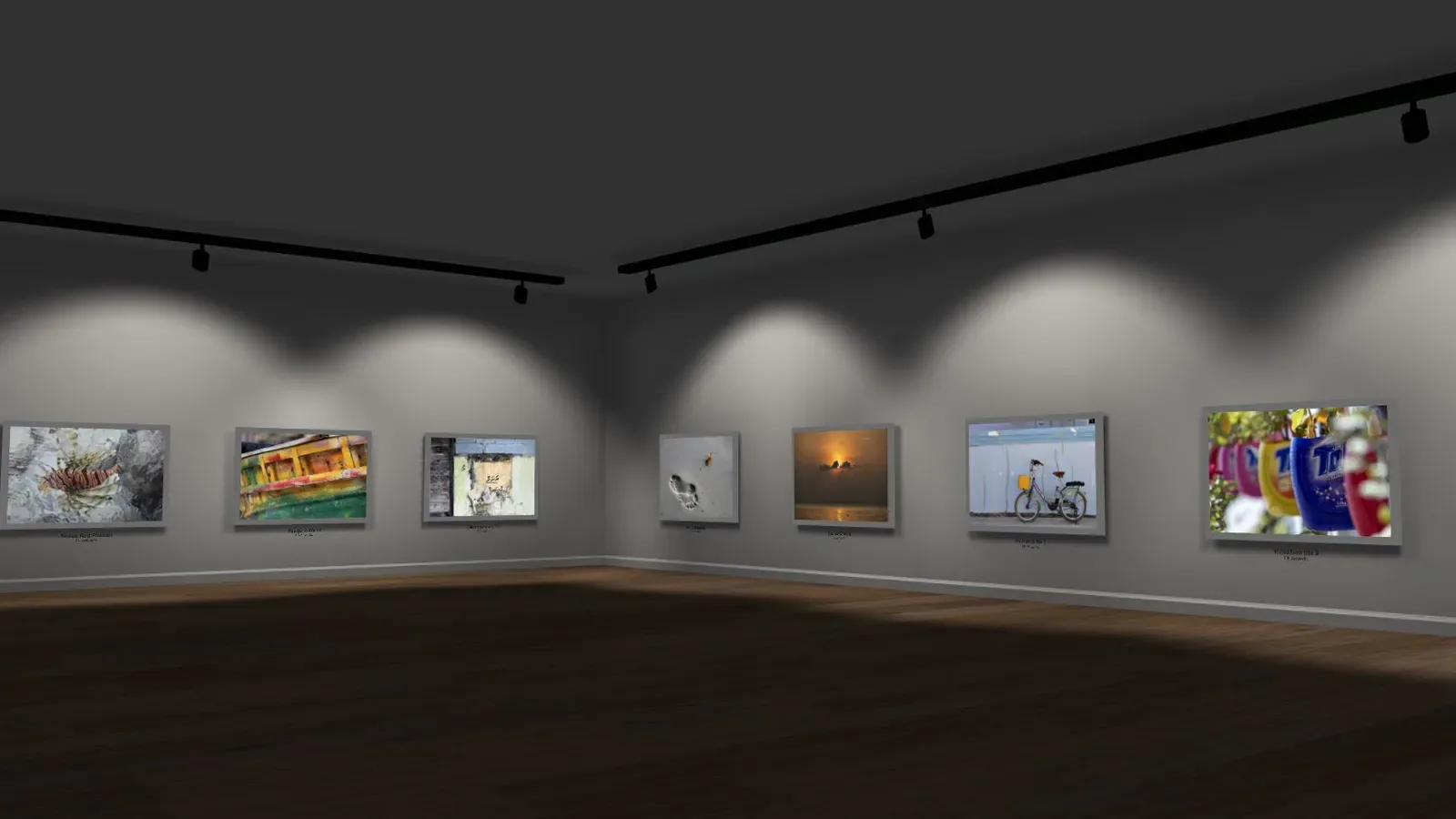
What I was missing was something in between: a space that feels like an exhibition (walls, light, a room your visitors walk through, the way my father’s watercolours were seen), but where nobody has to say yes before you can open the door, and where you keep full control of what is shown and how. That last part is like privacy: nobody values it until they lose it.
I could not find anything that ticked all the boxes, so I built OpenVGal, a virtual art gallery for artists. You put your works on the walls of a 3D gallery, and anyone with the link can walk through it in their browser. No app, no curator’s approval, no algorithm deciding who gets in.
My father needed an association to get his work onto a wall. Today, the wall can be yours.
Luis
FAQ
- How can I show my art online without a gallery?
- You have four independent options: a website builder or portfolio platform, your own artist website, social media, or a 3D virtual gallery. None of them needs anyone’s approval. They differ in cost, in how much time they take, and in whether your work is shown as a grid of thumbnails or as an exhibition.
- Are open calls with a participation fee worth it?
- Check who pays the gallery. If it earns its money from artists rather than from collectors, it is a vanity gallery: you are the customer, and being “selected” is the product.
- What is a virtual art gallery?
- A 3D room that opens in a web browser, with your works hanging on its walls. Visitors walk through it from a link, much like a physical exhibition, with no app to install. More in the OpenVGal FAQ.